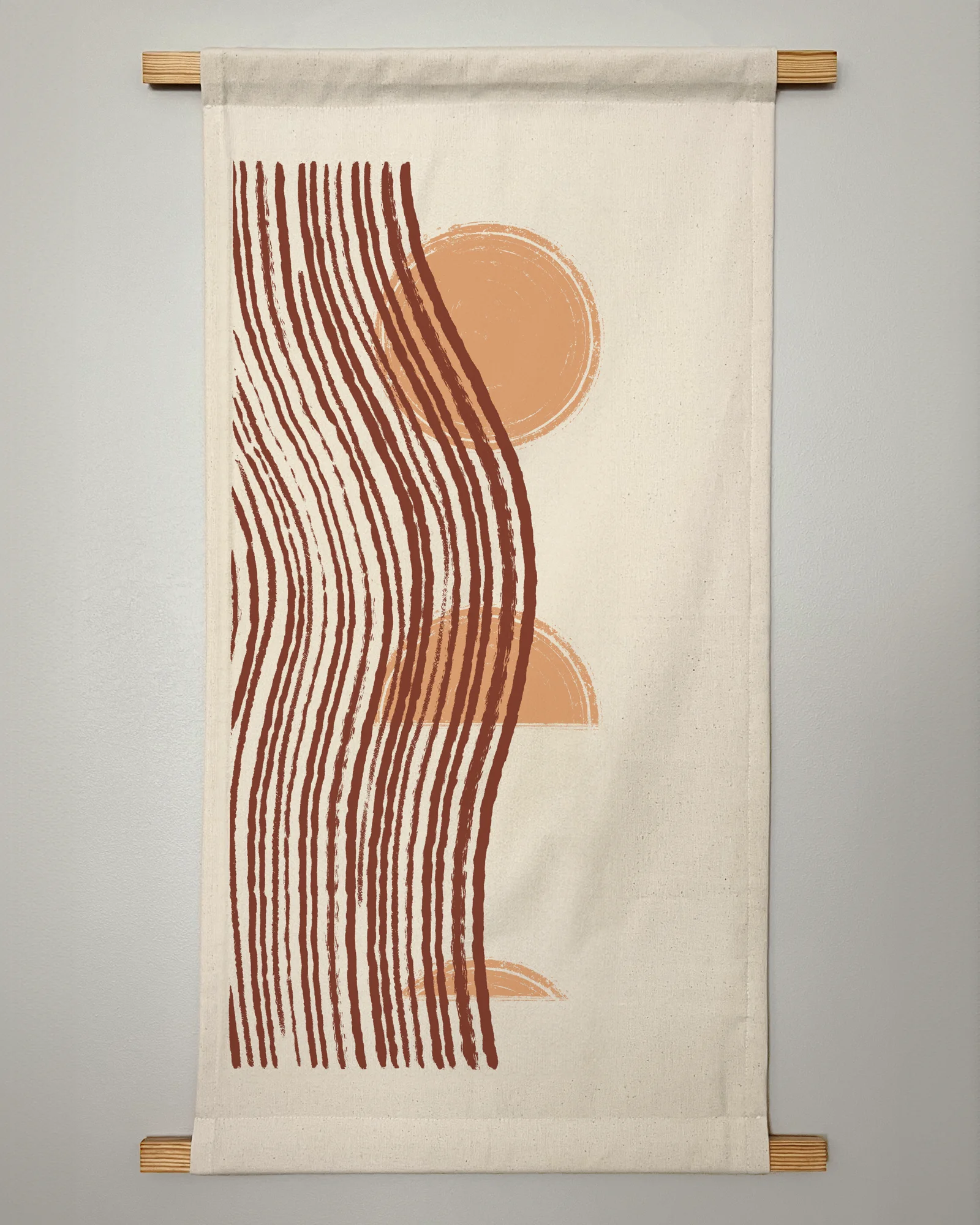
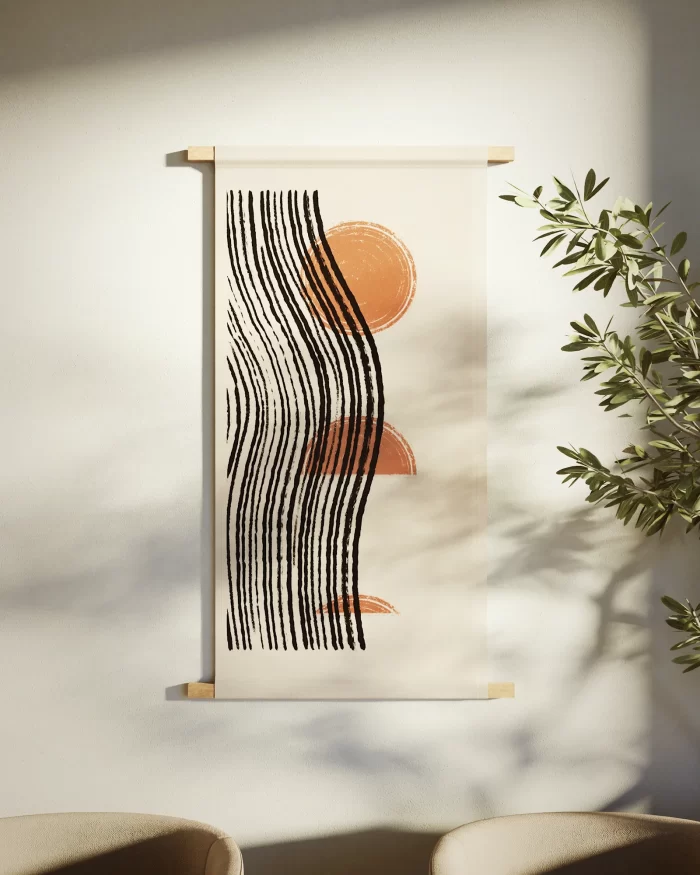
Wall Art Sol Invictus terracotta
80,00€
Wall art inspired by the meaning of the winter solstice.
Sol Invictus (Latin for “Unconquered Sun”) symbolized the triumph of light over darkness, celebrated during the winter solstice, when the sun began to “be reborn” after the shortest day of the year.
With this panel, we aim to honor the significance of celestial cycles for many cultures since ancient times—cycles that transformed into symbols and traditions that, although their origins may have been forgotten, still endure today.
Illustrated by artist Joana Mundana and produced in Portugal.
Details
Total dimensions: 60×100 cm
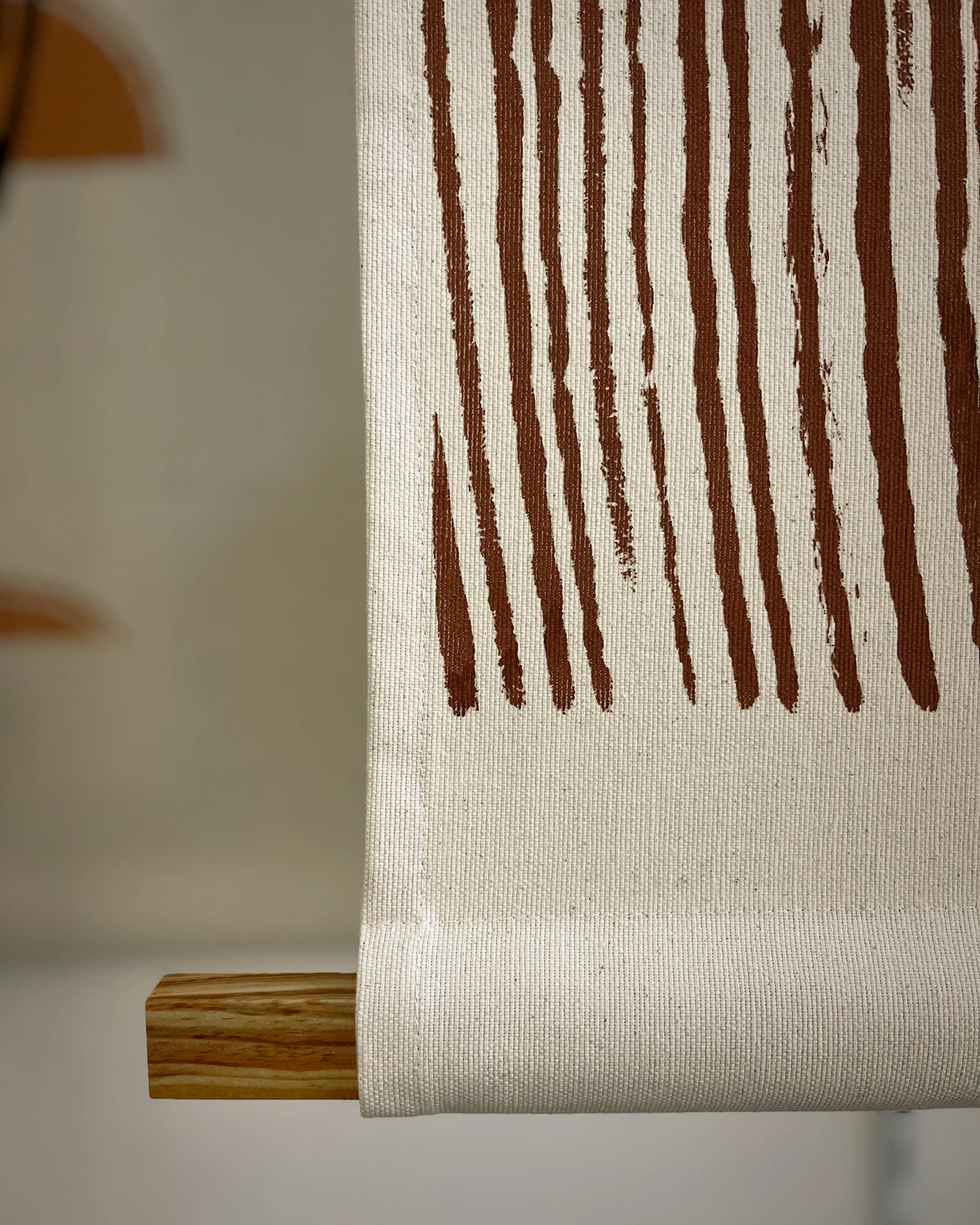
Hand-printed using serigraphy on 100% cotton fabric
Natural pine wood supports, with two support points
Produced in Portugal
Care & Maintenance
For optimal product appearance, we recommend hand washing without spin drying.
Cold wash or a maximum temperature of 30ºC.
Do not tumble dry. Preferably dry flat, stretched out, or hung.
Notes
Due to its handmade process, the product may have slight variations compared to the images shown.

Did you know...
The universal significance of the sun and natural cycles in ancient cultures gave rise to deeply rooted beliefs and practices across different parts of the world.
The winter solstice, the shortest day of the year, marked a turning point when the days began to grow longer again, bringing the rebirth of nature and the renewal of harvests.
Celebrating the return of light was a way to reaffirm hope and renewal, universal concepts that reflected fundamental human needs.
Long before Christianity, peoples such as the Norse, Celts, and Romans already celebrated this time of year as a moment of rebirth.
During Yule, the Norse festival, and the Roman celebration of Natalis Invicti Solis (“Birth of the Unconquered Sun”), the return of light was honored around December 21.
These pagan traditions of renewal and hope later influenced Christianity, as the birth of Jesus was placed within the same period, connecting ancient rituals of light with the new faith.
Many elements of these ancient celebrations—such as the tree, gifts, and family gatherings at Christmas—continue to be an integral part of cultural traditions today.
Related products
-
-
Wall Art Sol Invictus black
80,00€ -
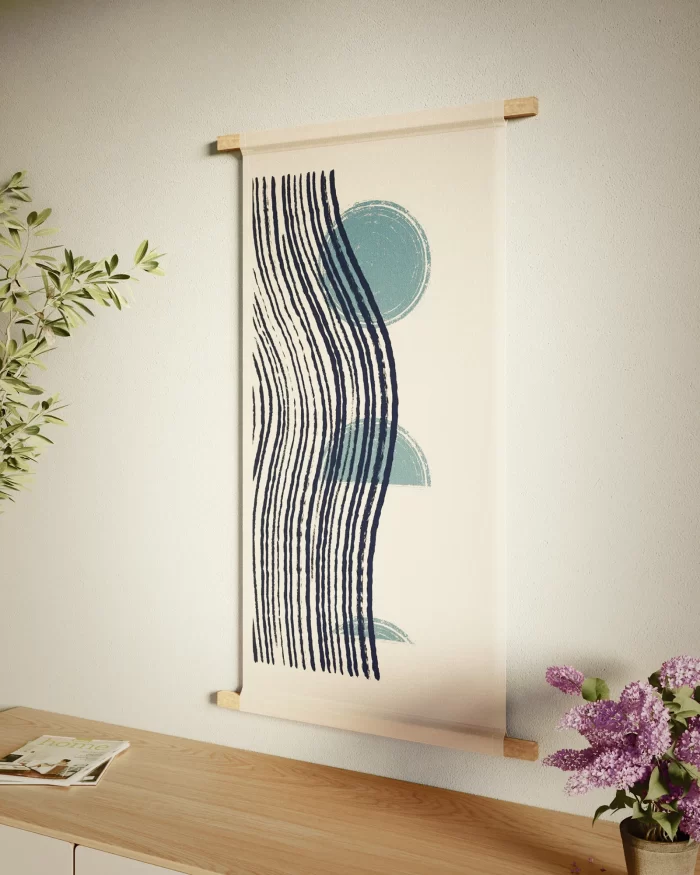
Wall Art Sol Invictus blue
80,00€